






Additional Information
Why apply?
You will receive:
- Financial support for the pursuit of an undergraduate degree for up to two years, and two additional years for students choosing to pursue a master’s degree.
- Paid summer internships under the guidance of an accomplished mentor at EM headquarters offices, field offices, and DOE national laboratories.
- Opportunities to engage with the EM community (e.g., EM field sites, contractors, stakeholders) and other STARS participants.
- Academic and career guidance.
- Continued engagement with EM after graduation through employment opportunities or postgraduate appointments. After completing the two-year scholarship and internship program, EM expects students to commit to, apply for, and, if selected, maintain employment with EM for the number of years equivalent to their award. Alternatively, EM will provide opportunities for participants to receive a postgraduate appointment with EM, should employment not be immediately available.
Am I eligible?
You must meet the following criteria at the time of application:
- Be a U.S. citizen.
- Be 18 years of age by the program start date.
- Have a cumulative GPA of 3.0 or above on a 4.0 scale.
- Be enrolled as an undergraduate student at a qualified institution.
- Have completed two full years toward an undergraduate degree and have up to two years remaining until graduation (specific cutoff dates to be noted in application).
- Be pursuing a STEM degree in a discipline that supports the Office of Environmental Management research and operations. EM has a wide array of critical needs that range from technical expertise and skilled trades to STEM research. Important areas of research with descriptions can be found below.
Selections are made by the EM mentor after completion of an eligible application in Zintellect. More information is available on the Apply Now page.
What will I receive?
- Tuition Allowance: Up to $36,000/academic year (Amount is based on expected average cost. The tuition allowance may be higher based on the student’s actual tuition costs).
- Stipend: $32,000/academic year
- Education Allowance: $5,000/scholarship year
- Two Summer Internships: 10-week internships
- Stipend: $750/week
- Housing Allowance: up to $700/week based on assigned location (If relocating more than 50 miles from the assigned location.)
- Local Transportation: $50/week
- Inbound/Outbound: $1,000 to cover travel to and from your site (If relocating more than 50 miles from the assigned location.)
DOE EM Mission Focused Areas
-
Advanced Manufacturing
 Advanced manufacturing is the use of innovative technologies to create existing products and the creation of new products, which can include production activities that depend on information, automation, computation, software, sensing, and networking, and support capabilities to address the climate crisis. Increasingly, manufacturers are realizing substantial financial and environmental benefits from sustainable business practices. Sustainable manufacturing is the creation of manufactured products through economically sound processes that minimize negative environmental impacts while conserving energy and natural resources.
 -
Artificial Intelligence
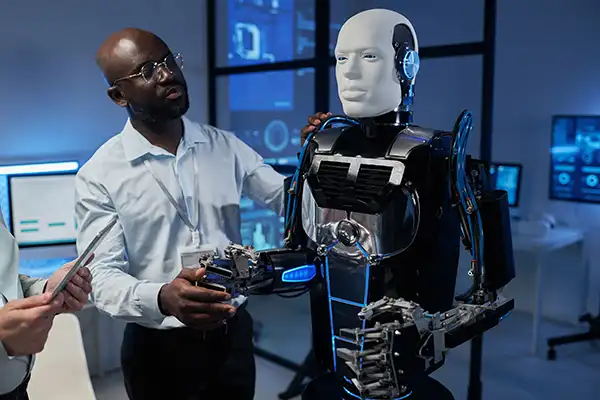 Artificial Intelligence (AI), a branch of computer science, is the science and engineering of making intelligent machines, especially dealing with the simulation of intelligent behavior in computers. AI is generally used as a universal term for applications that perform complex tasks that once required human input, such as visual perception, speech recognition, decision-making, and language translation. Artificial intelligence is often used interchangeably with machine learning (ML) and deep learning. Artificial Intelligence (AI) is central to accessing, interpreting, and acting upon climate data to manage environmental crises.
 -
Cybersecurity
 Cybersecurity is the art of preventing or mitigating the impact of digital attacks on systems, networks, devices, programs, and data, including unauthorized access or criminal use, and the practice of ensuring confidentiality, integrity, and availability of information. Cybersecurity aims to protect individuals’ and organizations’ systems, applications, computing devices, sensitive data, and financial assets against simple and annoying computer viruses, sophisticated and costly ransomware attacks, among other things. Cybersecurity threats to the environment are at the infrastructure level, including drinking water and wastewater systems. Treating municipal water, at both the consumption and disposal ends of the spectrum, requires pipelines, massive treatment facilities, and distribution networks, all tied together with command and control centers operated from connected computer networks, which are vulnerable to security threats.
 -
Deactivation & Decommissioning
 Deactivation is the process of placing a contaminated (nuclear, radiologically, or radioactive), excess facility in a stable condition to minimize existing risks and protect workers, the public and the environment. Decommissioning is the final process of closing and securing the facility consistent with established end states, to provide adequate protection from radiation exposure and isolation from the human environment. The D&D process includes the removal of hazardous and radioactive materials to ensure adequate protection of workers, public health and safety, and the environment; placing the facility in a stable condition, thereby limiting the long-term cost of surveillance and maintenance, after which, demolition/disposition occurs. D&D presents unique hazards that must be addressed from a safety, programmatic, environmental, and technological standpoint.
 -
Machine Learning
 Machine learning (ML) is a branch of artificial intelligence (AI) and computer science that focuses on the use of data and algorithms to imitate the way that humans learn, gradually improving its accuracy. With a wide range of applications, the main goals of ML are classifying data based on models that have been developed and making predictions regarding some future outcome based on these models. Machine-learning methods are used by public agencies to monitor and enforce environmental regulations in lieu of limited resources while accounting for real-world concerns, such as gaming the system and institutional constraints.
 -
Robotics
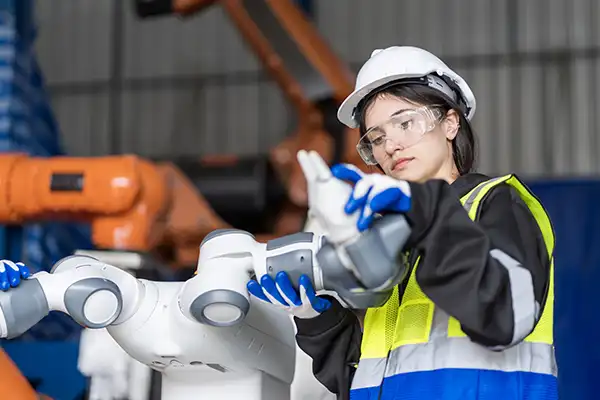 Robotics is an interdisciplinary division of engineering and computer science that involves the conception, design, construction, and operation of mechanical robots. The purpose of robotics is to create intelligent machines that can assist humans in a variety of ways, including resembling a human or being in the form of a robotic application, such as robotic process automation, which simulates how humans engage with software to perform repetitive, rules-based tasks. Incorporating robotic technology in science and manufacturing serves to develop co-robots that can work in cooperation with people. Robots, robotic systems, and the application of robotic technologies and principles are developed to minimize negative impacts and prioritize sustainability, environmental preservation, and eco-friendly practices.
 -
Soil & Groundwater Remediation
 Soil and groundwater remediation is the process of removing contaminants, such as heavy metals, petroleum hydrocarbons, and pesticides, from soil and water sites that have been polluted by human activities. Untreated, soil and water contamination present many risks through direct contact, ingestion (eating or drinking), or when introduced into the food supply chain, and can be fatal for us, plant life, and wildlife. The end goal is to eliminate the contamination sources or reduce the concentration of contaminants to acceptable levels for specific land use. There are various methods of remediation, such as containment, soil washing, thermal treatment, vapor extraction, bio-remediation, incineration, and other physical/chemical treatments utilized to protect people and the environment against potentially harmful pollutants.
 -
Tank Waste
 Tanks hold waste, present in the forms of sludge, liquid, solids, and vapors, created during the process of extracting plutonium from spent fuel, and contain both radioactive and chemical waste. Its complexity, along with the fact that it is highly radioactive, caustic, and toxic, makes tank waste particularly difficult, dangerous to treat, and less mobile. Tank waste programs store radioactive liquid waste safely and use major nuclear facilities to process and dispose of the waste, as well as emptying, cleaning, and closing the waste tanks to minimize the negative environmental impacts.