
Oak Ridge Institute for Science and Education (ORISE)
Shaping the Future of ScienceSpotlight
-
REAC/TS Symposium to feature experts in the field of radiation emergency medicine
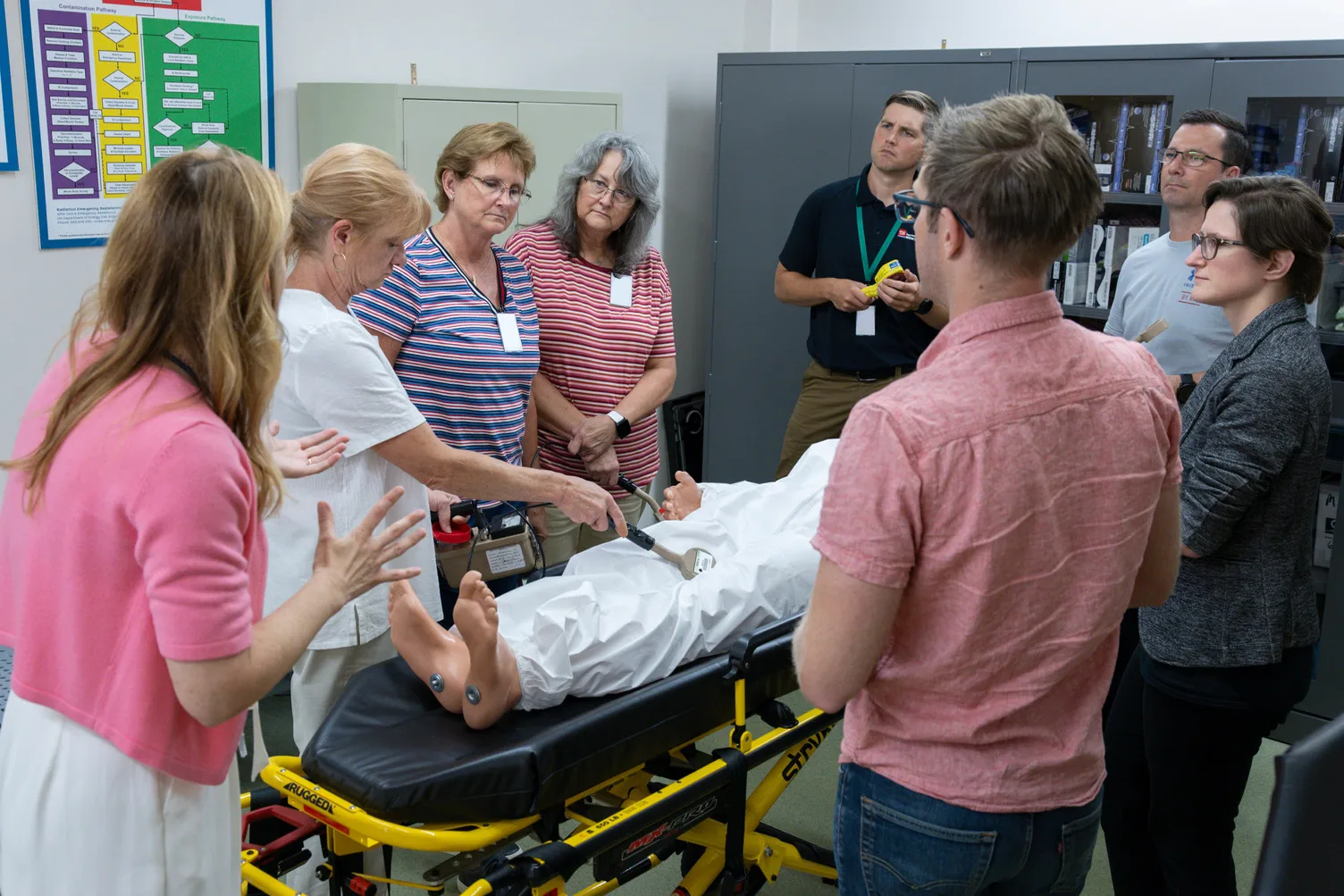
The Sixth REAC/TS International Symposium: The Medical Basis for Radiation-Accident Preparedness is November 3-5, 2026 and will feature radiation medical management staff from REAC/TS, as well as experts from across the United States and internationally, who will present on topics including current and emerging nuclear risks, innovations in management of radiation injuries/illnesses, and the Nuclear Renaissance.
-
Poster session showcases research conducted by ORISE participants
Participants in internship and fellowship programs administered by the Oak Ridge Institute for Science and Education (ORISE) presented their research during a virtual poster session held on Aug. 25 as part of the 2026 ORISE Symposium.
-
ORISE announces winners of 2026 Future of Science Awards
The Oak Ridge Institute for Science and Education (ORISE) is proud to announce the winners of the 2026 Future of Science Awards. The winners were recognized during a virtual ceremony held on Aug. 28, 2026, as part of the second annual ORISE Symposium.
-
2026 ORISE Ignite Off! competition winners announced

ORISE is proud to announce the winners of the 2026 All ORISE Ignite Off! Competition, an annual event showcasing interns and fellows in ORISE-administered programs as they present their research through dynamic, five-minute Ignite Talks.
ORISE News
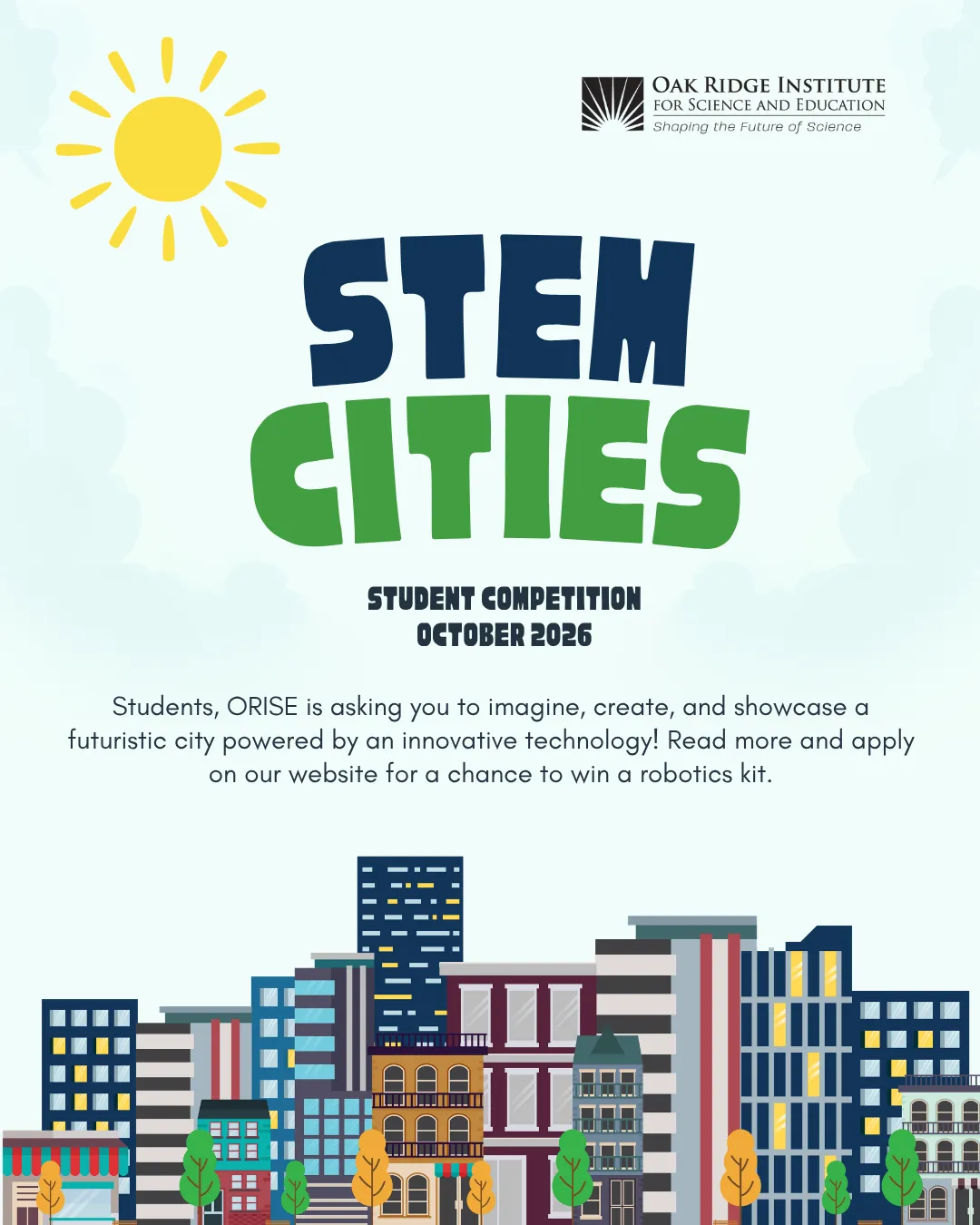
STEM Cities Student Competition
Cities of the future will rely on cutting‑edge technologies to solve today’s biggest challenges, from alternative energy to smart infrastructure to AI‑driven design.
Connecting the next generation of STEM professionals with DOE opportunities
Allen Wash helps support U.S. Department of Energy programs that engage and develop future STEM professionals.