


Mickey Leland participant boosts skills through NETL internship experience
Meet Claire Larson
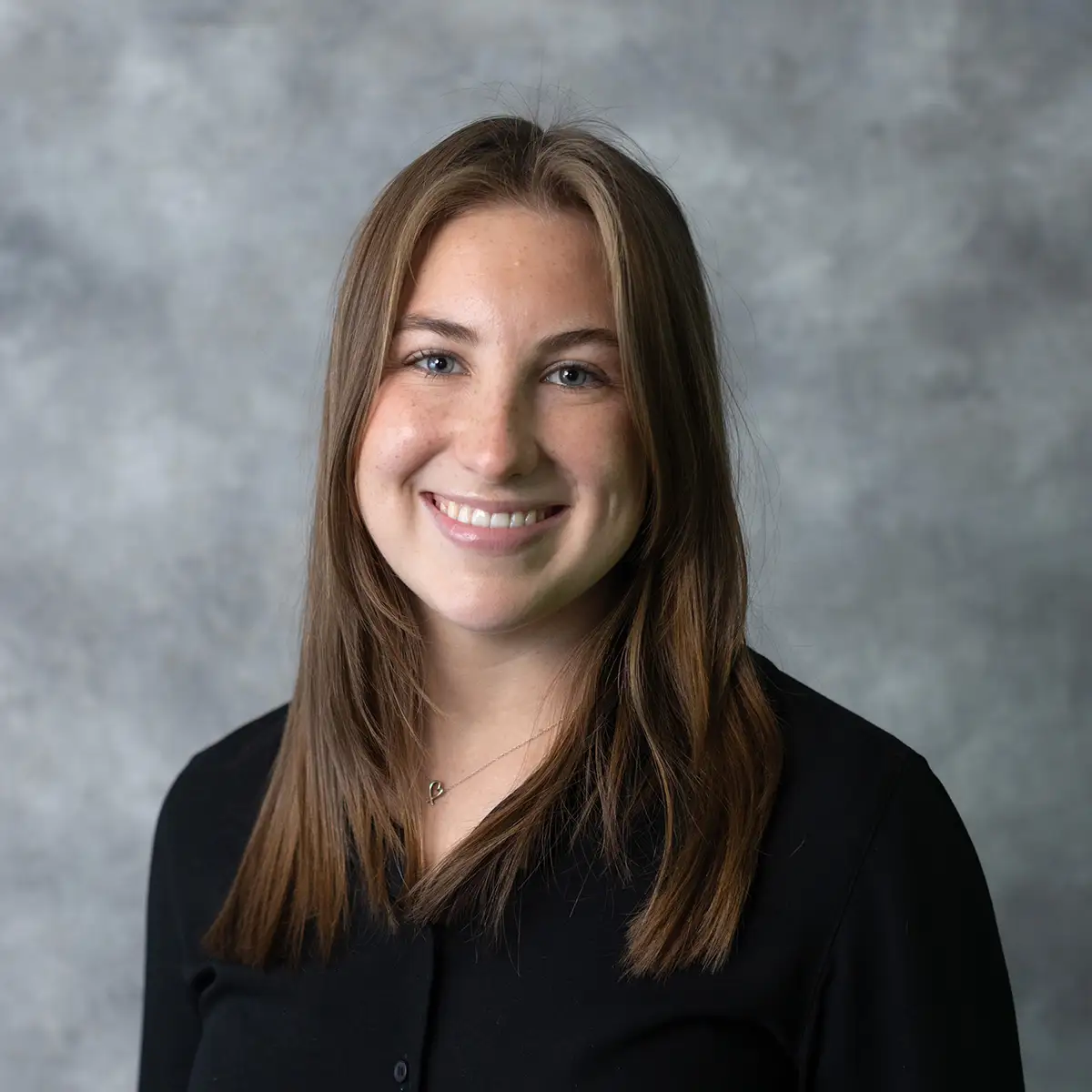
Claire Larson conducted research on specialized polymers used in carbon capture through the Mickey Leland Energy Fellowship Program at the National Energy Technology Laboratory. (Photo Credit: NETL)
Growing up amid the scenic landscapes of New Mexico, Claire Larson developed a deep appreciation for the natural world.
Later, as a double major in chemistry and earth and environmental science at Wesleyan University, she became interested in how scientific research can help drive solutions to pressing sustainability challenges.
Looking to build on that interest, Larson spent a recent summer conducting hands-on research at the National Energy Technology Laboratory (NETL) in Pittsburgh through the U.S. Department of Energy’s (DOE) Mickey Leland Energy Fellowship Program.
The Mickey Leland program is a 10-week summer research internship for undergraduate and master's students in STEM fields. Participants complete a cutting-edge research project at one of DOE’s national laboratories or DOE headquarters in support of the Hydrocarbons and Geothermal Energy Office.
Under the mentorship of Ali Sekizkardes, Ph.D., a research physical scientist at NETL, Larson studied how specialized polymers used for carbon capture break down when exposed to heat, humidity, and oxygen—and how that degradation affects their ability to absorb carbon dioxide.
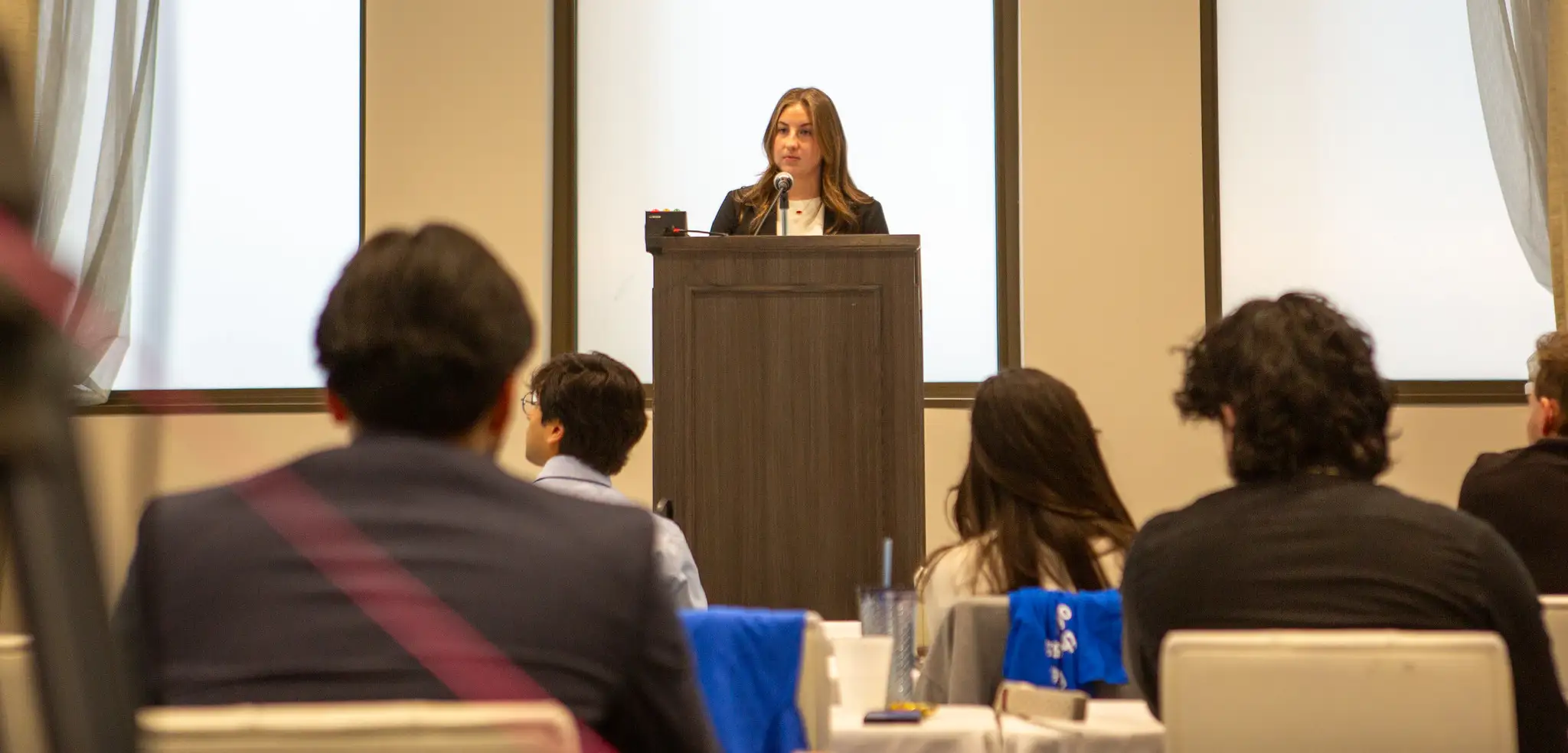
At the conclusion of her internship, Larson gave a presentation on her research during the Mickey Leland Energy Fellowship Technical Forum. (Photo Credit: NETL)
Her time in the program strengthened her skills as a researcher, provided valuable insight into the publication process and expanded her professional network.
In this Q&A, Larson reflects on her time in the Mickey Leland program, the skills she developed, and the impact the experience had on her academic and professional growth.
Tell us a little bit about your backstory and what motivated you to pursue a STEM career.
I grew up in New Mexico hiking in the Sandia Mountains, skiing at Taos Ski Valley and swimming in crystal blue mountain lakes. I also witnessed the Rio Grande running dry and intense wildfires that sent smoke over Albuquerque. These early experiences instilled a deep desire to preserve the natural world, forming my personal identity and professional goals. During my double major in chemistry and earth and environmental science at Wesleyan University, I learned that I could use chemistry as a tool to solve pertinent problems that the Earth is currently facing. Seeing different sides of environmental work solidified my desire to be a scientific researcher by expanding how I think of sustainability and pushing me to also focus on how chemistry research can have a lasting impact.
What was the focus of your internship, and what kind of projects were you involved in?
The main focus of my project was analyzing the degradation of polymers of intrinsic microporosity (PIMs). These polymers can be functionalized and utilized for carbon capture applications, so my goal was to understand and quantify how the carbon uptake of these polymers change when they degrade after being exposed to heat, humidity and oxygen. In doing this, I was also trying to understand the mechanism of degradation.
What skills or knowledge did you gain during your internship?
This internship taught me how to work independently on a high-functioning team. My research also went well enough that I was able to write a manuscript for publication that has since been accepted to the American Chemical Society’s Applied Polymer Materials. From this I learned how to outline, draft and edit a manuscript, which I had not had the previous opportunity to do.
During your internship, what professional development events or activities did you participate in that added value to your experience?
I participated in various networking events at the beginning of the internship, then attended the four-day Technical Forum at the end in which I gave a presentation on my research. The networking events that I attended were the first experiences I had networking. I was very uncomfortable with it at first, but as I talked to more and more people, I became much more confident in my ability to reach out to others. This both helped me learn about possible career paths and prepare me for the graduate school application process. During these applications I felt comfortable cold emailing and talking to professors both over Zoom and in person. Presenting at the Technical Forum gave me the opportunity to learn how to decide what information is necessary to present for a general audience and make a 10-minute presentation that is impactful and communicates my research effectively. Going through this process strengthened my presenting skills and confidence.
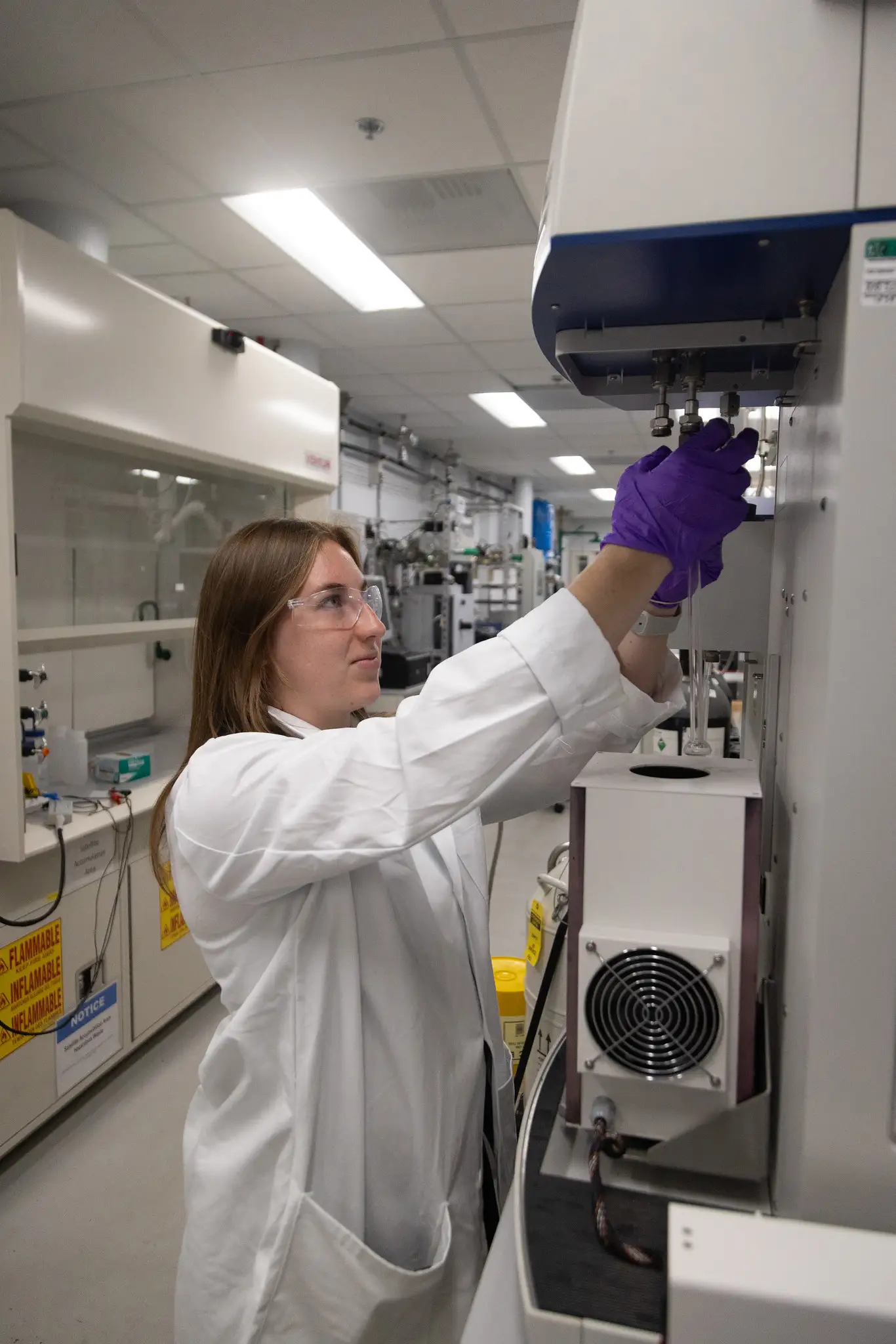
The Mickey Leland program provided Larson with hands-on experience in the laboratory. (Photo Credit: NETL)
What was the most rewarding or exciting part of your internship experience?
The most rewarding aspect of the internship was the relationships I made with other researchers. I am still in touch with many of my fellow interns, along with people on the research team I was in. I truly look up to my mentors and believe that I will be in touch with them for a long time.
How do you see this internship shaping your future career or academic goals? What are your long-term aspirations in the STEM field?
I believe this internship will shape how I view research for at least the next decade because it aligns with a lot of my general research goals in sustainability. After graduating from Wesleyan University, I am attending the University of Illinois Urbana-Champaign to pursue a Ph.D. in organic chemistry. After getting a Ph.D. I hope to continue my career either at a national lab or in academia. I want my research area to focus on sustainable/recyclable plastics, or plastics that can help mitigate different areas of pollution.
Looking back on your experience, how would you describe the overall impact and benefits of participating in this program, both personally and professionally?
This program made me a much more independent researcher and showed me a lot about how the publication process goes. It also gave me experience being part of a professional team.
What can you share about yourself outside of your academic and professional journey? Any hobbies or interests, favorite activities, hidden talents, or memorable experiences that might surprise or inspire your peers?
I enjoy cooking, running, hiking and traveling with my family. After completing my Ph.D. I hope to backpack around Asia.
The Mickey Leland Energy Fellowship Program is managed by the U.S. Department of Energy’s (DOE) Hydrocarbons and Geothermal Energy Office and administered by the Oak Ridge Institute for Science and Education (ORISE). ORISE is managed for DOE by ORAU.