


ORISE launches knowledge network to strengthen worker health, safety programs across DOE
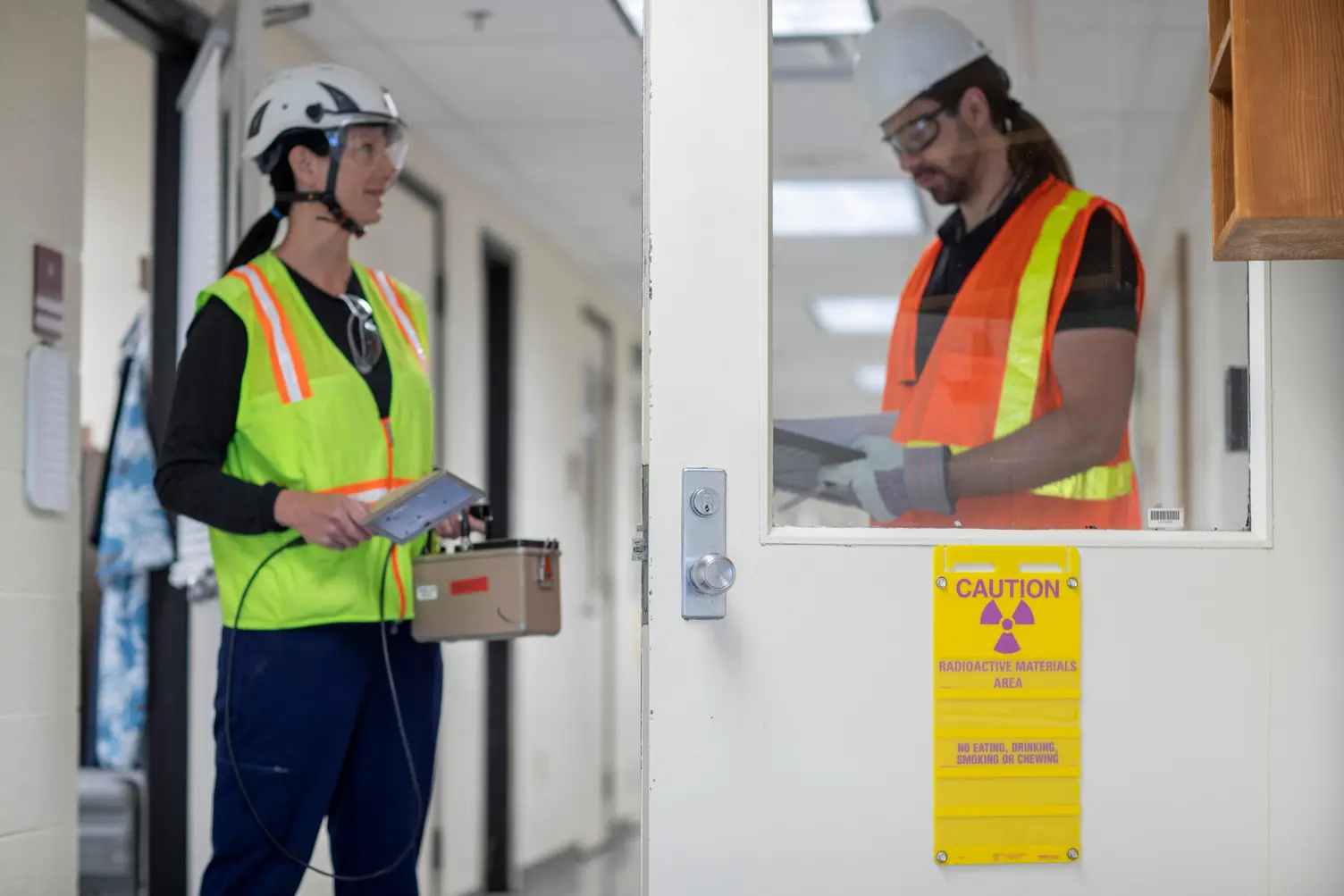
What if the worker health and safety information you need were available anytime, with just a few clicks?
The ORISE Worker Health Knowledge Network brings together decades of expertise and terabytes of data from across the U.S. Department of Energy complex into one trusted resource. Whether the question involves beryllium exposure, radiation monitoring, occupational health trends, emerging hazards, or human subjects protection, the network connects users to reliable answers quickly and efficiently.
Housed within the ORISE Health Studies Program, the Worker Health Knowledge Network supports data analysts, researchers, occupational and healthcare professionals, federal and state health officials, and policymakers. It provides streamlined access to authoritative scientific and technical information that strengthens worker health and safety programs across DOE.
“A knowledge network brings people and information together across organizational boundaries to create and share expertise,” said Ashley Golden, Ph.D., director of the ORISE Health Studies Program. “The system fulfills this role by integrating ORISE subject matter experts with epidemiologic datasets, regulatory guidance, technical reports, and scientific publications.”
The platform links modern and legacy systems, preserving nearly 80 years of institutional knowledge while improving accessibility for today’s workforce. It was developed to address two persistent challenges: critical worker health resources dispersed across multiple systems, and workforce turnover that can erode familiarity with reporting requirements and protection programs. By centralizing both information and expertise, the Worker Health Knowledge Network helps close these gaps.
ORISE manages some of the nation’s most comprehensive repositories of worker health and exposure data. These include the Beryllium-Associated Worker Registry, the Comprehensive Epidemiologic Data Resource, the Human Subjects Research Database, the Radiation Exposure Information and Reporting System, and the Radiation Exposure Monitoring System. The Worker Health Knowledge Network also provides access to legacy DOE programs such as the Illness and Injury Surveillance Program and DOE Health and Mortality Studies.
The Worker Health Knowledge Network reflects the expertise behind the data. ORISE operates one of only three U.S. laboratories that perform the beryllium lymphocyte proliferation test to assess sensitization. The program supports the Million Person Study examining low-dose radiation effects and has contributed to the DOE Human Subjects Protection Program since 1988. Staff members publish peer-reviewed research, support Institutional Review Boards, and help shape national and international standards.
“The Worker Health Knowledge Network is more than an information portal. It is a centralized repository grounded in practice and built on decades of applied scientific leadership,” said Golden. “Future enhancements will expand resources, strengthen collaboration, and introduce advanced analytical tools to further improve usability and insight.”
Media Contacts
Pam Bonee
Director, Communications
Phone: 865.603.5142
pam.bonee@orau.org
Wendy West
Manager, Communications
Phone: 865.207.7953
wendy.west@orau.org
The Oak Ridge Institute for Science and Education (ORISE) is a U.S. Department of Energy (DOE) asset that is dedicated to enabling critical scientific, research, and health initiatives of the department and its laboratory system by providing world class expertise in STEM workforce development, scientific and technical reviews, and the evaluation of radiation exposure and environmental contamination.
ORISE is managed by ORAU, a 501(c)(3) nonprofit corporation and federal contractor, for DOE’s Office of Science. The single largest supporter of basic research in the physical sciences in the United States, the Office of Science is working to address some of the most pressing challenges of our time. For more information, please visit science.osti.gov.