


Health and Human Services fellow quantifies positive impact of maternal and child health services
Meet Maggie Mangas
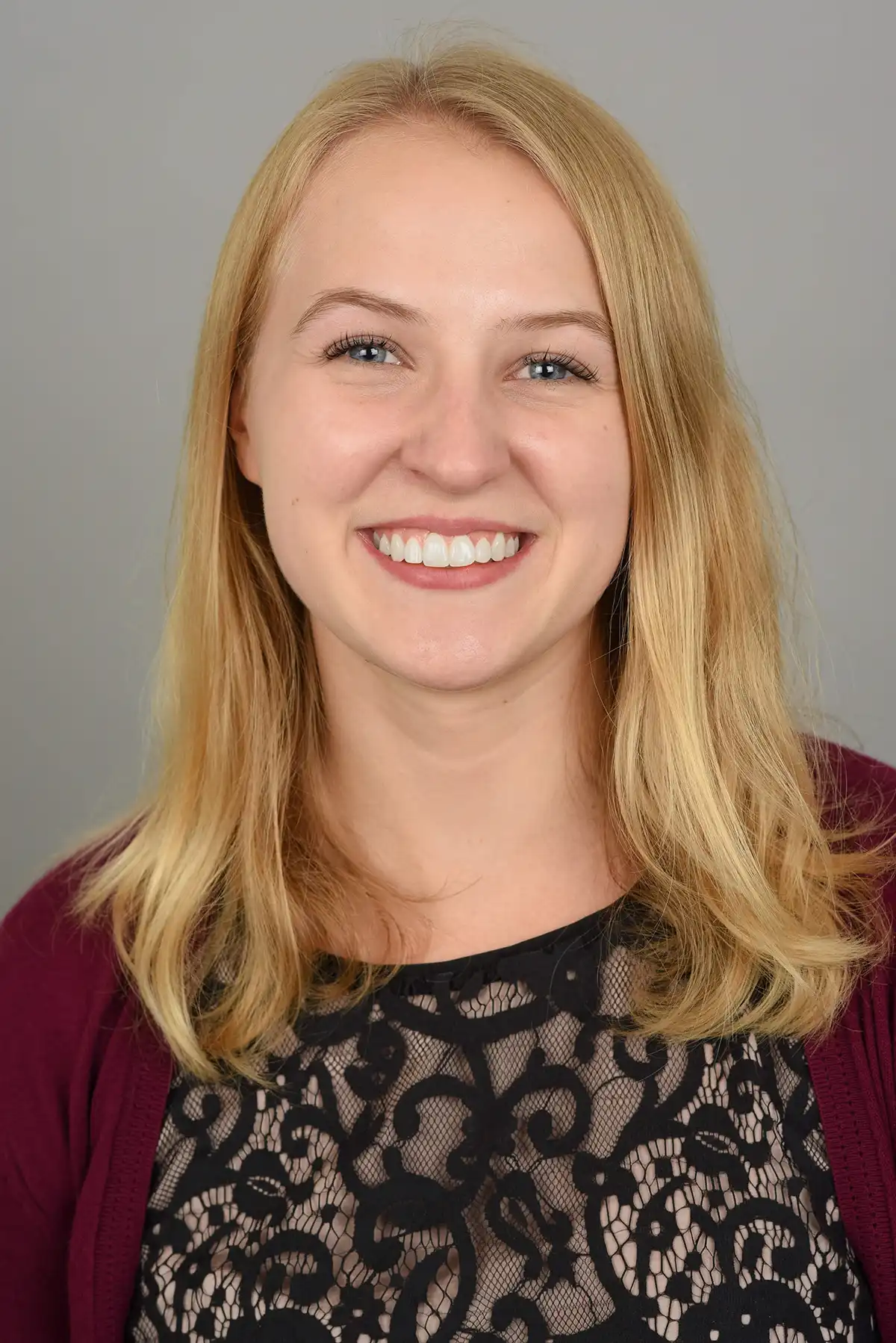
Maggie Mangas enjoys seeing the real benefits that the Maternal, Infant and Early Childhood Home Visiting Program brings to the world. (Credit: Maggie Mangas)
Maggie Mangas was always interested in science and mathematics, leading her to try almost any STEM opportunity presented to her. She eventually narrowed her focus on health care systems and health outcomes. Looking to continue her studies after earning a Master of Public Health (MPH), she applied for an Oak Ridge Institute for Science and Education (ORISE) fellowship at the U.S. Department of Health and Human Services (HHS) Health Resources and Services Administration (HRSA).
As an ORISE fellow on the data and evaluation team within HRSA’s Maternal, Infant and Early Childhood Home Visiting (MIECHV) Program, Mangas conducts quantitative and qualitative analysis of MIECHV projects to better understand their successes and challenges and has helped develop a publicly accessible user interface for anyone to view data about MIECHV’s efforts.
In this Q&A spotlight, Mangas talks about her experience as a fellow and seeing the real-world impact MIECHV services have for mothers and families, and what that impact means to her.
Tell us a little bit about your backstory and what motivated you to pursue a STEM career.
I have always been interested in science and math, which motivated me to pursue my undergraduate degree in biochemistry. During that time, I took advantage of every opportunity to try different pathways in STEM, from bench lab research using zebrafish as a model to study cancer, to being a teaching assistant for a physics course to working on clinical trials for a treatment for postpartum depression. Through these experiences, I realized my passion for maternal health, and while I was not interested in working in a direct patient care role, I was very interested in research to improve health care systems and health outcomes. As such, I pursued an MPH, during which time I had the opportunity to work on qualitative research related to inpatient postpartum care. Seeking to continue my studies in maternal health while building more quantitative skills, I pursued my ORISE HHS fellowship with the MIECHV program.
How did you hear about ORISE programs/opportunities, and why did you apply?
I heard about the ORISE program from a fellow student in my MPH cohort. I was excited to apply for the ORISE fellowship with the MIECHV program for several reasons. First, during my MPH I worked on a project related to the MIECHV program, so I was already a bit familiar with it and knew of the positive impact it has on mothers, children and families. Second, I had only worked for private organizations previously, and I was interested in learning more about research in the federal government. Finally, having just recently completed my MPH, I was interested in a professional opportunity that would allow me to take advantage of learning and development opportunities. The ORISE fellowship met everything I was looking for and has been a fantastic experience.
What is the focus of your fellowship, and what kind of projects are you involved in?
My fellowship is with the data and evaluation team for the MIECHV program, which helps pregnant women and parents of young children improve health and well-being for themselves and their families by partnering with trained home visitors. States and territories implement MIECHV programs in their local communities and report data to HRSA on various measures related to maternal and newborn health, child injuries, maltreatment and emergency department visits, school readiness and achievement, crime or domestic violence, family economic self-sufficiency, and coordination and referrals. I’m a part of projects to quantitatively and qualitatively analyze this data. For example, I was a part of a qualitative analysis to understand successes, challenges and mitigation strategies for using American Rescue Plan Act funding to support MIECHV programs. I have also helped develop a public facing dashboard to display the MIECHV program reach, participant characteristics, performance data and demonstration of improvement at the national and state/territory level. The projects I have been involved in aim to understand what is working well with the MIECHV program and what changes could be made to improve the program in the future.
What skills or knowledge have you gained during your fellowship so far?
I have gained skills such as programming with SAS, technical writing, furthering my quantitative and qualitative analysis skillset, project management and coordinating with different project teams during my ORISE fellowship. I have also deepened my knowledge of the MIECHV program and maternal and child health research. While I was part of a project about the MIECHV program during my MPH, I was only aware of the tip of the iceberg in terms of how the program functions and the impact that it has. My fellowship has provided ample opportunities to learn more about how MIECHV programs are implemented, what is required, how the program helps mothers, children and families, and innovations and research within the field.
During your ORISE appointment, what professional development events or activities did you participate in that added value to your experience?
I have attended research conferences during my ORISE appointment, including the Society for Pediatric and Perinatal Epidemiologic Research Annual Meeting and the Rural Health Philanthropy Partnership Meeting. Attending these conferences has allowed me to learn more about cutting-edge research in my field and connect with fellow researchers to grow my professional network. I also had the opportunity to present a poster about my research on the use of American Rescue Plan Act funding to support MIECHV programs at the ORISE Symposium, which was a great opportunity to practice presentation skills and connect with fellow ORISE participants.
What has been the most rewarding or exciting part of your fellowship experience?
The most rewarding part of my fellowship has been seeing the impact of the MIECHV program on mothers, children and families. I had the opportunity to observe a site visit where our team got to meet with state and local staff implementing MIECHV programs, and during the meeting, a family who received MIECHV services came to speak. The mother spoke of how her home visitor helped her manage her postpartum depression, and how she couldn't imagine her life without her home visitor. I could see the direct impact of MIECHV as program staff described using data to identify the highest risk communities and prioritize them for MIECHV services. I feel so grateful to be part of a team helping improve the health of mothers and children and connect families to resources in their community.
Have there been challenges you faced during this experience? How did you overcome those?
I think the main challenge during my ORISE fellowship has been managing changing priorities that have impacted my projects. I have been pulled into new projects, had to deprioritize other projects and had changing responsibilities on certain projects to continue to meet the needs of the program in light of shifting capacity and priorities. I have overcome this challenge through candid communication with my mentor about my projects and capacity. I have also approached every project I have been on with an excitement to learn as much as I can, which has helped me make the most of every opportunity.
How do you see this fellowship shaping your future career or academic goals? What are your long-term aspirations in the STEM field?
My ORISE fellowship has been critical for my future career and academic goals. My long-term aspiration is to pursue a doctoral degree focused on maternal health and become an independent researcher with a body of research focused on improving quality health outcomes for all mothers. Through my ORISE fellowship I have had the opportunity to meet and collaborate with leaders in the maternal health field, which has been critical for growing my professional network and narrowing my research interests.
Looking back on your experience, how would you describe the overall impact and benefits of participating in this program, both personally and professionally?
Participating in the ORISE fellowship has been incredibly valuable for developing my professional network and building my research skillset. However, I'm most grateful for the direct mentorship I have received through the ORISE fellowship and the opportunity to collaborate with so many incredible colleagues in the Division of Home Visiting and Early Childhood Systems. My ORISE mentor has thoughtfully provided feedback on not only my concrete deliverables but also my communication and soft skills, which has been instrumental for my professional development. The team I’m a part of is passionate about making the MIECHV program the best it can be, and it's inspiring to collaborate with such a mission-driven group of people.
What can you share about yourself outside of your academic and professional journey? Any hobbies or interests, favorite activities, hidden talents, or memorable experiences — like trips you’ve taken or dream of taking — that might surprise or inspire your peers?
Outside of my academic and professional journey I love to compete in endurance races! I have done three Ironman triathlons (2.4-mile swim, 112-mile bike, 26.2-mile run), several half Ironman triathlons (1.2-mile swim, 56-mile bike, 13.1-mile run), and this year I competed in a 275-mile running relay from the mountains to the coast of France. I also qualified for half Ironman world championships, so in just a few weeks, I'll travel to Marbella, Spain, to race the top triathletes in the world!
The Maternal, Infant and Early Childhood Home Visiting (MIECHV) Program is authorized by 42 U.S.C. § 711(c) (Title V, § 511(c) of the Social Security Act. The MIECHV Program is administered by U.S. Department of Health and Human Services, Health Resources and Services Administration.
The MIECHV fellowship is administered through the U.S. Department of Energy’s (DOE) Oak Ridge Institute for Science and Education (ORISE). ORISE is managed for DOE by ORAU.