


A transformative experience at the FDA
Meet Innara Basria
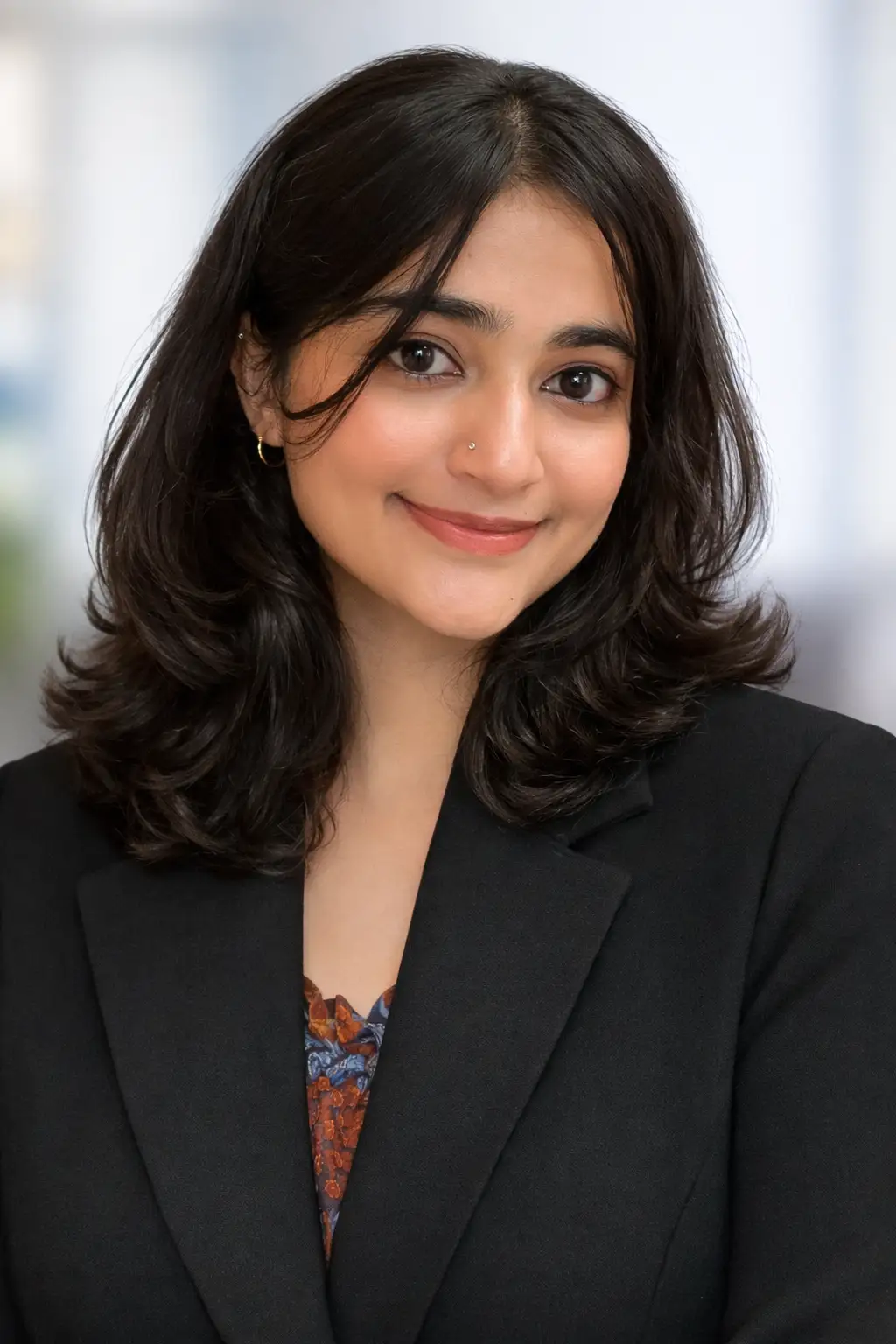
Innara Basria explored methods to ensure viral safety in the manufacturing of modern medicines through an ORISE-administered fellowship at the U.S. Food and Drug Administration.
For Innara Basria, a fellowship at the U.S. Food and Drug Administration (FDA) was more than a research opportunity — it was a career launchpad.
After earning a master’s degree in engineering from the Keck Graduate Institute (KGI), Basria gained hands-on experience at the FDA’s Center for Drug Evaluation and Research through a research participation program administered by the Oak Ridge Institute for Science and Education (ORISE). Under the mentorship of FDA Senior Biologist Scott Lute, she explored methods to ensure viral safety in the manufacturing of modern medicines.
Through her ORISE fellowship, Basria presented her research at international conferences, published in peer-reviewed journals and connected with professionals across the biopharmaceutical industry.
“Looking back, the impact of this fellowship has been profound, both for my career and my personal journey,” she says.
In this Q&A, Basria discusses her path into STEM, the technical and professional skills she developed during her fellowship, and how the experience has shaped her career.
Tell us a little bit about your backstory and what motivated you to pursue a STEM career.
My journey into STEM really began when I moved from Pakistan to the U.S. at 13. Like many immigrant families, we came here seeking a better life and the kind of opportunities that only seemed possible in the States at the time. Growing up, I was always a strong student, but I had a very narrow view of biology — I thought if you loved the subject, you had to become a doctor.
The turning point was the COVID-19 pandemic. I was an undergrad at the University of South Florida, and because of the lockdowns, our lab access was really limited. But those rare moments I did get to spend behind the bench felt different — exciting, almost childlike in the sense of pure discovery. It made me realize I didn’t want to just treat patients; I wanted to understand the "how" behind the medicine.
I stumbled upon a two-week internship at KGI that introduced me to bioprocessing, and honestly, it changed everything. My curiosity for biotechnology was ignited, leading me straight into a Master of Engineering program. I’ve always thought it was incredible that we can modify living systems to create safe, life-saving therapies. Today, that passion has evolved into a focus on modernizing how we actually manufacture these products — a drive that’s been deeply reinforced by the regulatory and technical exposure I’ve received during my time at the FDA.
How did you hear about the ORISE program, and why did you apply?
I first heard about the ORISE program during a viral safety seminar in my second year at KGI. At the time, I was deep into a capstone project where my team had to design a theoretical end-to-end manufacturing process for a mesenchymal stem cell therapy. The project was intense; we were essentially acting as a startup trying to bring a molecule to market, which meant navigating the massive complexities of drug development and regulation.
During a technical workshop on viral safety, a senior biologist from the FDA came to speak to us (virtually). He mentioned the fellowship, and I was immediately intrigued. Funny enough, that scientist (Lute) eventually became my mentor once I joined the program.
Choosing a fellowship after finishing my master’s felt like an atypical path. Most of my cohort moved straight into industry roles, but I felt a strong pull to keep learning. I knew my long-term goal was to become a specialized downstream scientist, and I saw this fellowship as the perfect way to get there. It offered me deep, hands-on exposure to viral clearance — a critical piece of downstream processing that you just don't get to master everywhere, let alone at the agency that regulates it.
What was the focus of your fellowship, and what kind of projects are you involved in?
The core of my fellowship at the FDA was focused on viral safety, essentially making sure that the complex processes used to manufacture modern medicines are foolproof at removing or inactivating any potential viral contaminants.
Most of my research involved a newer way of making medicine called continuous manufacturing. In a traditional setup, medicine is made in large, separate batches, which is slow and requires a lot of space. Continuous manufacturing is like an assembly line; it’s faster and more efficient, but because the fluid is always moving, we must be extremely precise about how long the medicine stays in each "safety zone" to ensure any viruses are fully neutralized.
My main project was studying a specific safety tool called a Packed Bed Reactor. I ran hundreds of experiments to see how different factors — like the size of the molecules or the speed of the flow — impacted that crucial "safety time.” I even had the chance to publish a first-author paper on this research, which provides a roadmap for how the industry can better design these systems.
What skills or knowledge did you gain during your fellowship?
My time in this fellowship has been transformative, moving me beyond the classroom and into the heart of how medical innovation is regulated and refined.
Through the program’s investment, I gained exposure to MATLAB, which allowed me to understand how to use statistical and programming tools to solve complex manufacturing problems. This shifted my approach from simple observation to data-driven analysis.
I gained deep, hands-on experience in downstream and virus clearance. I learned to not only execute experiments but to ask the "better questions" that lead to specialized solutions for modern manufacturing challenges.
I had the incredible opportunity to present my research at a major international conference (Integrated Continuous Biomanufacturing VI), where my research was selected for a poster spotlight. This experience sharpened my ability to communicate complex engineering concepts to a global audience.
Perhaps most importantly, being surrounded by policy makers and regulatory scientists provided me with a "regulatory sense.” I now look at innovation through a dual lens: It must be cutting-edge, but it must also be safe and effective for the patients who need it most.
During your ORISE appointment, what professional development events or activities did you participate in that added value to your experience?
My ORISE appointment provided a platform for significant professional growth through high-level scientific communication and collaboration.
I had the opportunity to serve as the first author on a research article titled "Design Considerations Impacting Flow Dynamics in Packed Beds for Virus Inactivation," published in Biotechnology Progress (2026). I also co-authored a comprehensive analysis of virus clearance trends across over 1,700 Investigational New Drug (IND) submissions, published in the Parenteral Drug Association (PDA) Journal of Pharmaceutical Science and Technology (2025).
I represented my research group at the Engineering Conferences International (ECI): Integrated Continuous Biomanufacturing VI in 2024. My research, "Failure Modes in Implementation of Continuous Packed Bed Viral Inactivation Reactors," was selected for a poster spotlight, allowing me to engage with global leaders in the bioprocessing field.
I participated in the Center for Drug Evaluation and Research/Office of Pharmaceutical Quality Research Internal Poster Day, which was invaluable for practicing how to communicate technical findings to a diverse group of regulatory scientists and policy makers.
What was the most rewarding or exciting part of your fellowship experience?
While the science has been incredibly fulfilling, the most rewarding part of my fellowship has undoubtedly been the people. Being a part of the FDA community meant more than just conducting research; it meant being surrounded by a group of brilliant and supportive colleagues. Whether it was the daily conversations with fellow scientists, or the after-hours social gatherings and food outings, the sense of camaraderie was constant. I even looked forward to the FDA farmers market, which added a wonderful sense of community to our professional environment.
Every day that I walked into the lab, I felt a genuine sense of joy knowing that my research contributed to the FDA's broader mission of protecting public health. There is a unique kind of pride in knowing that your efforts help ensure the safety and efficacy of the products patients rely on every day. Being able to contribute to such a vital mission alongside people who became friends is what made my time at the agency truly unforgettable.
How do you see this fellowship shaping your future career or academic goals? What are your long-term aspirations in the STEM field?
This experience has fundamentally changed my career trajectory by providing me with a "regulatory lens" that I couldn't have acquired anywhere else. It has shown me that being a great scientist isn't just about what happens at the lab bench, but about understanding how that research fits into the complex legal and safety frameworks that protect patients. The technical training I received, particularly in MATLAB and statistical modeling, has equipped me to handle the high-level data analysis required for the next generation of biopharmaceutical manufacturing.
My long-term goal is to become a specialized end-to-end downstream scientist. I want to be at the forefront of implementing continuous manufacturing technologies that make life-saving therapies more accessible and affordable.
Looking back on your experience, how would you describe the overall impact and benefits of participating in this program, both personally and professionally?
Looking back, the impact of this fellowship has been profound, both for my career and my personal journey.
Professionally, this program is a career "skyrocket." You are given access to high-class facilities and cutting-edge equipment that are the gold standard in the biopharmaceutical industry. The specialized training and exposure I received — from mastering MATLAB to navigating complex virus clearance studies — have been invaluable. Beyond the technical skills, the opportunity to present my findings at international conferences allowed me to become a more effective communicator and taught me how to collaborate within high-stakes, cross-functional teams.
On a personal level, I feel an immense sense of pride in what I have accomplished. When I first immigrated to this country 13 years ago, I never could have imagined that I would one day be at the FDA conducting research to protect public health. During the pandemic, I remember the frustration of applying for internships only to find everything shut down; it makes being here now feel even more significant.
Finding this path through a chance seminar at KGI changed the trajectory of my life. Because of that, I feel a strong desire to give back. I want to help provide that same exposure to younger students, encouraging them to utilize these incredible opportunities sooner.
What can you share about yourself outside of your academic and professional journey? Any hobbies or interests, favorite activities, hidden talents or memorable experiences that might surprise or inspire your peers?
When I’m not in the lab, I focus on staying active and enjoying my downtime. My main hobbies include cooking at home and exploring different cuisines, staying fit through gym routines or CrossFit, and traveling whenever I get the chance. These days, I also spend a lot of my time unwinding by watching reality TV.
The Research Participation Program at the U.S. Food and Drug Administration (FDA) is administered through the Oak Ridge Institute for Science and Education (ORISE) under an agreement between the FDA and the U.S. Department of Energy (DOE). ORISE is managed for DOE by ORAU.