


ORISE fellowship helps pave way for career in scientific leadership
Meet Adrienne Sponberg
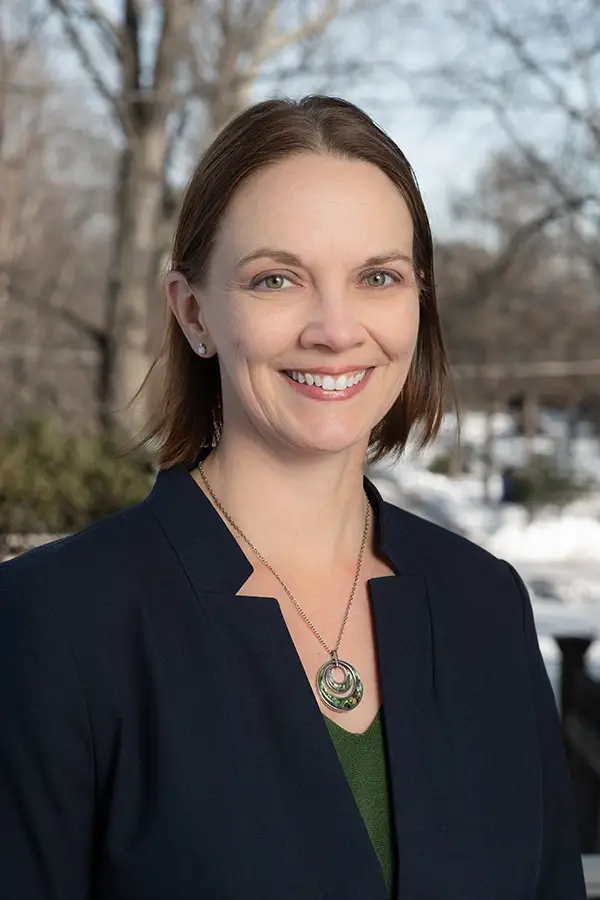
Adrienne Sponberg, Ph.D., cites her ORISE fellowship experience at the National Oceanic and Atmospheric Administration as a pivotal early step in her career journey. Photo Credit: Pete Duvall
For Adrienne Sponberg, Ph.D., an ORISE fellowship at the National Oceanic and Atmospheric Administration (NOAA) helped lay the foundation for a career at the intersection of science, policy and leadership.
Since completing her fellowship, Sponberg has gone on to serve in leadership roles at various scientific associations. Most recently, she was named executive director of the Ecological Society of America, where she continues to apply the skills she developed as an ORISE fellow.
In this ORISE Alumni Q&A, Sponberg reflects on her fellowship experience and how it helped shape her path in scientific leadership.
Tell us a little bit about your backstory and what motivated you to pursue a STEM career.
I grew up in Rocket City, USA (Huntsville, Alabama), where nearly everyone in my class had a parent working either at NASA or Army Missile Command. I was always surrounded by scientists and engineers, so I had a lot of role models. During high school, I was selected to participate in NASA's Summer High School Apprenticeship Research Program, which solidified my choice to pursue a career in STEM.
What was the focus of your ORISE fellowship, and what kind of projects were you part of?
During my ORISE fellowship, I was part of a small team at NOAA that administered $150 million in federal funding to states impacted by offshore oil and gas development. Each state proposed projects aligned with program requirements and our office reviewed each submission to ensure compliance with applicable federal laws, such as the Americans with Disabilities Act, Endangered Species Act and the National Historic Preservation Act. I had just completed a yearlong fellowship in the office of U.S. Sen. Ron Wyden, so being in the executive branch and seeing policy implemented was eye-opening.
What was the most memorable or impactful part of your fellowship experience?
It was really rewarding to go from being in the legislative branch — in the year the authorizing legislation was approved — and then seeing it come to life during site visits to review projects in areas like coastal Louisiana.
How did the program challenge you or help you grow as a professional?
The ORISE fellowship was crucial in expanding my knowledge and understanding of how science and policy work together to create meaningful impacts on the ground.
Were there any key lessons or skills you learned during the program that you still use today?
The biggest takeaway from this experience was learning how a seemingly straightforward legislative concept can be surprisingly complex to implement administratively. During the fellowship, I created a database to track project submissions, monitor permitting status and categorize projects by priority areas highlighted in the authorizing legislation. Investing a little bit of time upfront in building this infrastructure paid big dividends when we'd get a call from a governor or senator's office about project status or how funds were being allocated across categories like recreation or conservation. Following my ORISE fellowship, I moved into roles with professional scientific societies, where I continue to rely on the skills developed in this project: organizing complex information and presenting clear, actionable insights in an appropriate format for policymakers and governing boards.
If you could go back and give yourself advice during your fellowship, what would it be?
I would tell myself — and any current or future ORISE fellows — not to underestimate how applicable a single project can be to your career trajectory. Programs like the ORISE fellowship give early-career professionals an incredible opportunity to explore new ways of thinking about their field while advancing their own professional development. My advice would be to take full advantage of the learning opportunities associated with your fellowship!